By CroquetClaude · 4 min read
How myCroquet's modularity keeps things simple
A small core plus modules that are visible only to the person they're for: a member never sees coaching admin, a treasurer sees accounting tools nobody else does.
myCroquet isn't one program, it's a small core plus modules that are switched on only for the person they're for. A member never sees coaching admin. A treasurer sees accounting tools nobody else does. Access is "gifted" per person, one command, one tag, same login for everyone.
If you are worried that a new system means more to learn, the design of myCroquet is intended to solve that problem. It is not one giant program. Instead, it consists of a small permanent core and a series of separate modules.
The core is what every signed in member always has. This includes your login, your own personal details, and the honours board. Everything else is a separate module that is switched on only for the people who need it.
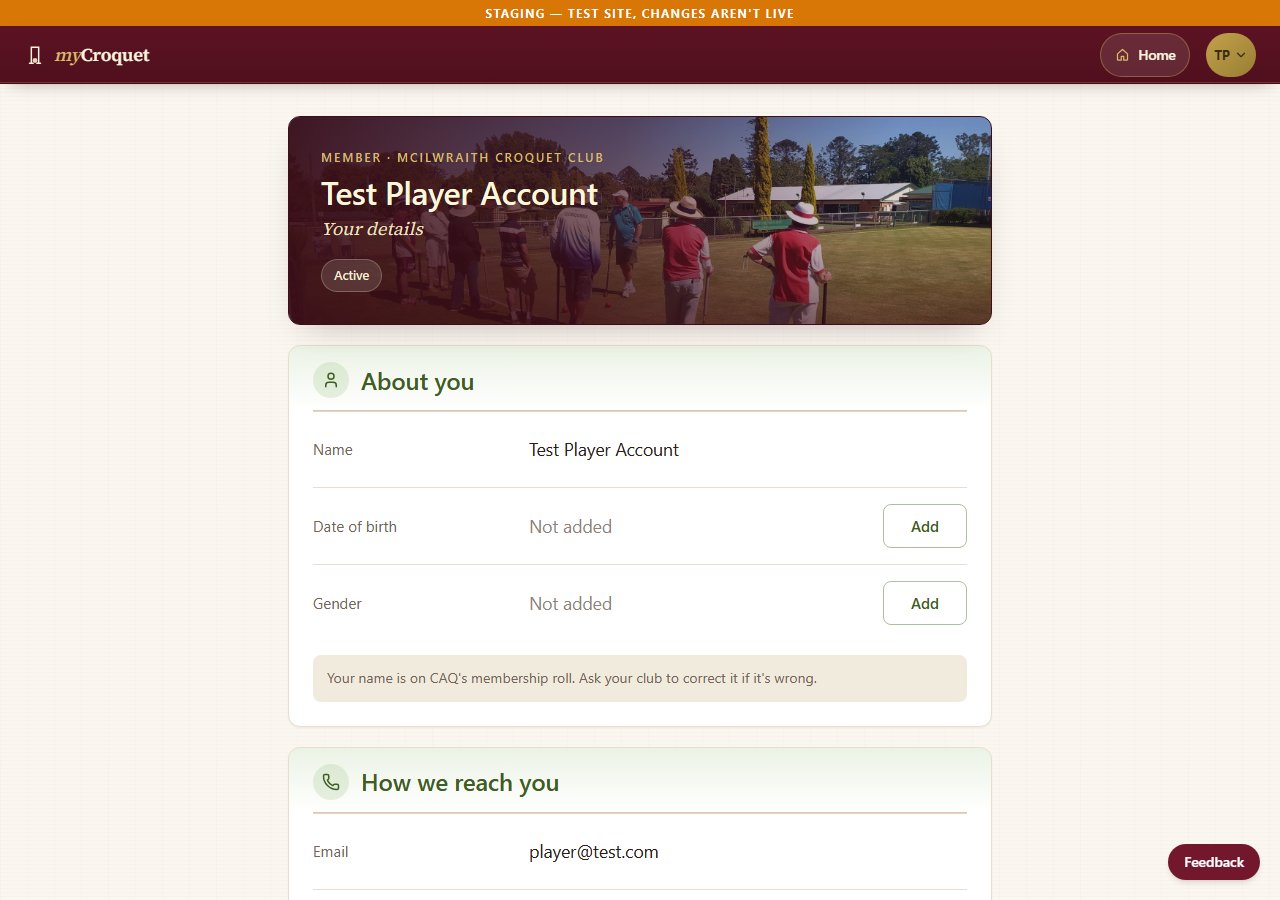
This means a general member, a club treasurer, and a coaching administrator are all using the same platform, but they are looking through three completely different front doors. You only see the tools that apply to your specific role.
Membership
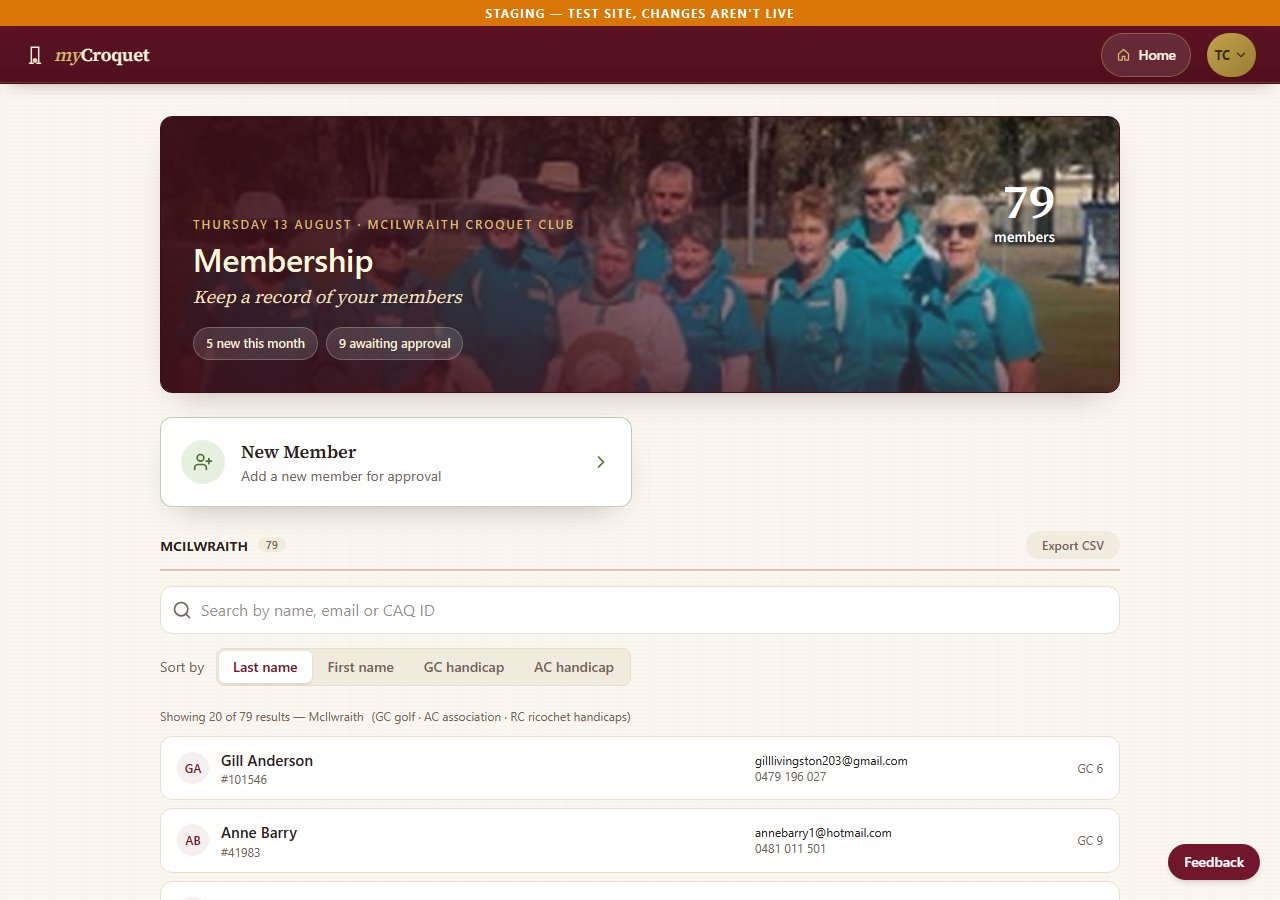
The Membership module is a good example. Club secretaries use a simple form to add, edit, and deactivate their own club members instead of working inside RevSport. A secretary cannot see or touch the records of any other club.
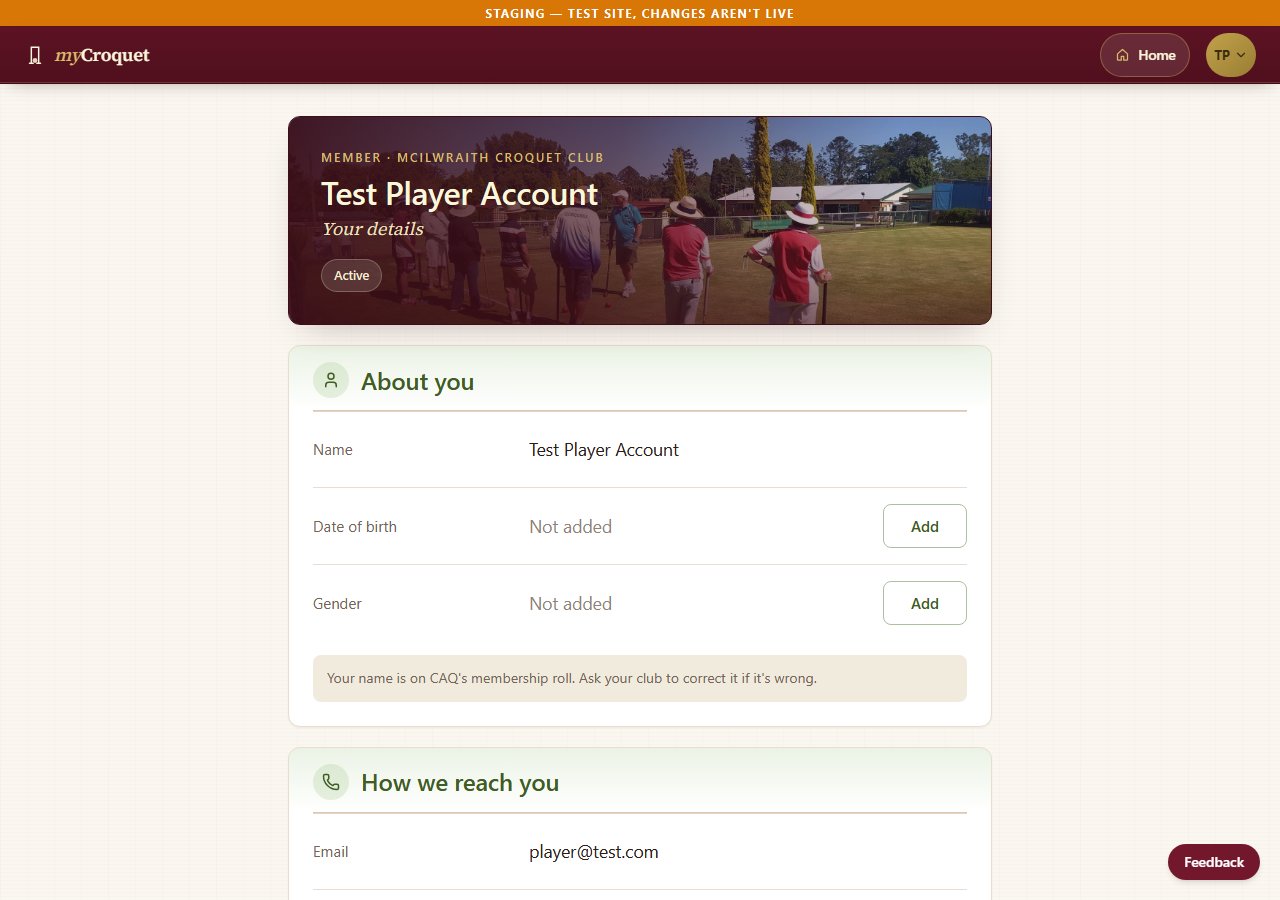
Because this is a module, it is only visible to those with the correct access. If you are not a secretary, you will not even see the Membership menu item. However, editing your own contact details always works for everyone because that function lives in the permanent core, not the module.
Coaching and refereeing
Coaching and refereeing follow a similar pattern. Every member can already see their own accreditation cards on their profile without needing to ask. This is a basic feature available to all.
The actual register, which allows a user to search, award, renew, or revoke accreditation, is a separate door. Only the handful of people named by CAQ to run coaching or refereeing can open it. This module is built and tested on a staging copy, but it is not yet live for real use.
Update: the coaching and refereeing module went live on 16 September 2026.
Come & Try
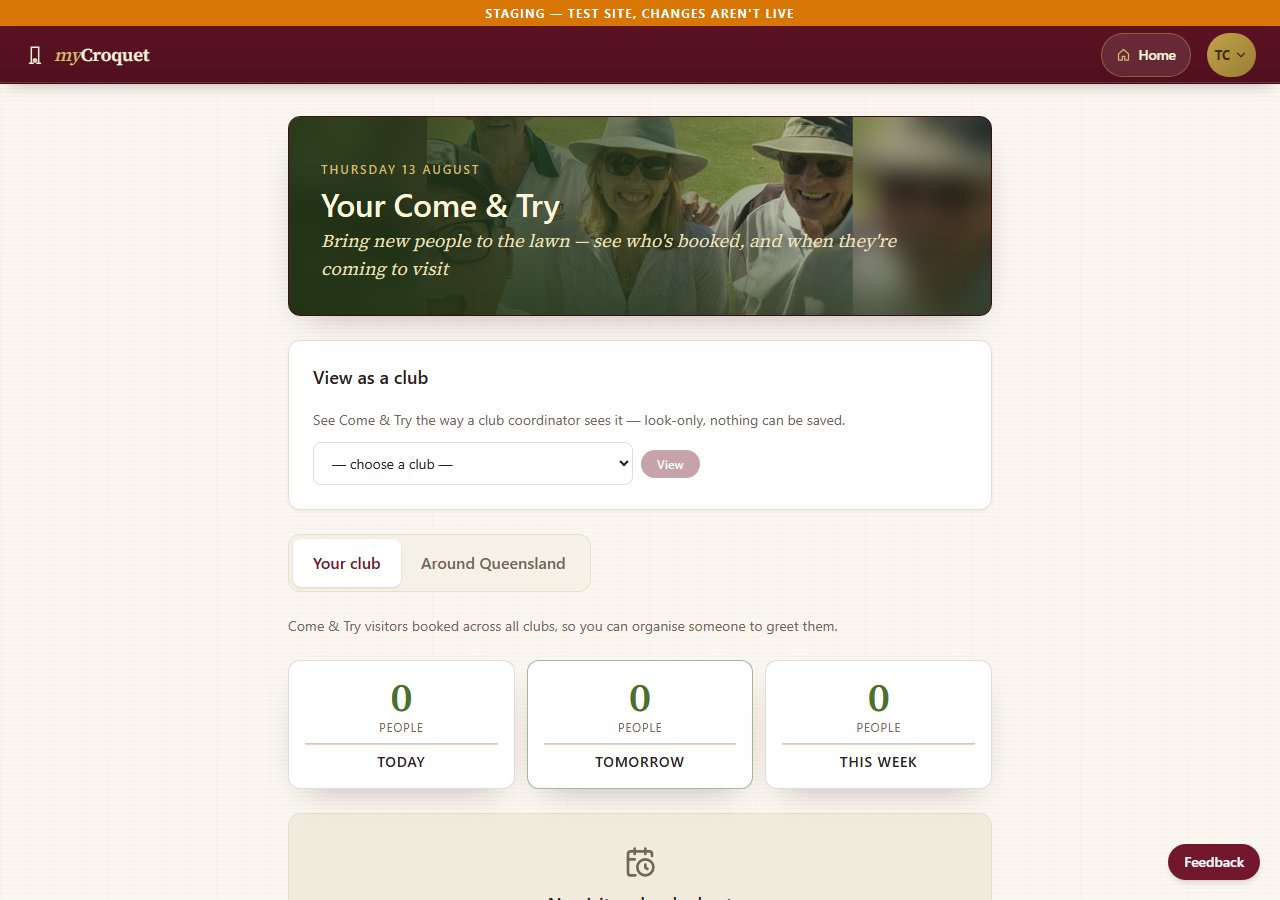
The Come & Try module works the same way. A person managing Come & Try for their club sees only their own club's bookings and times. They cannot reach the statewide Command Centre, which shows every club's funnel and system health.
This separation is absolute. A real test using a club member account showed only My Details and Come & Try, with no way to access the wider system. Currently, 12 clubs run their own self service, with 26 people holding the necessary access.
Treasurer
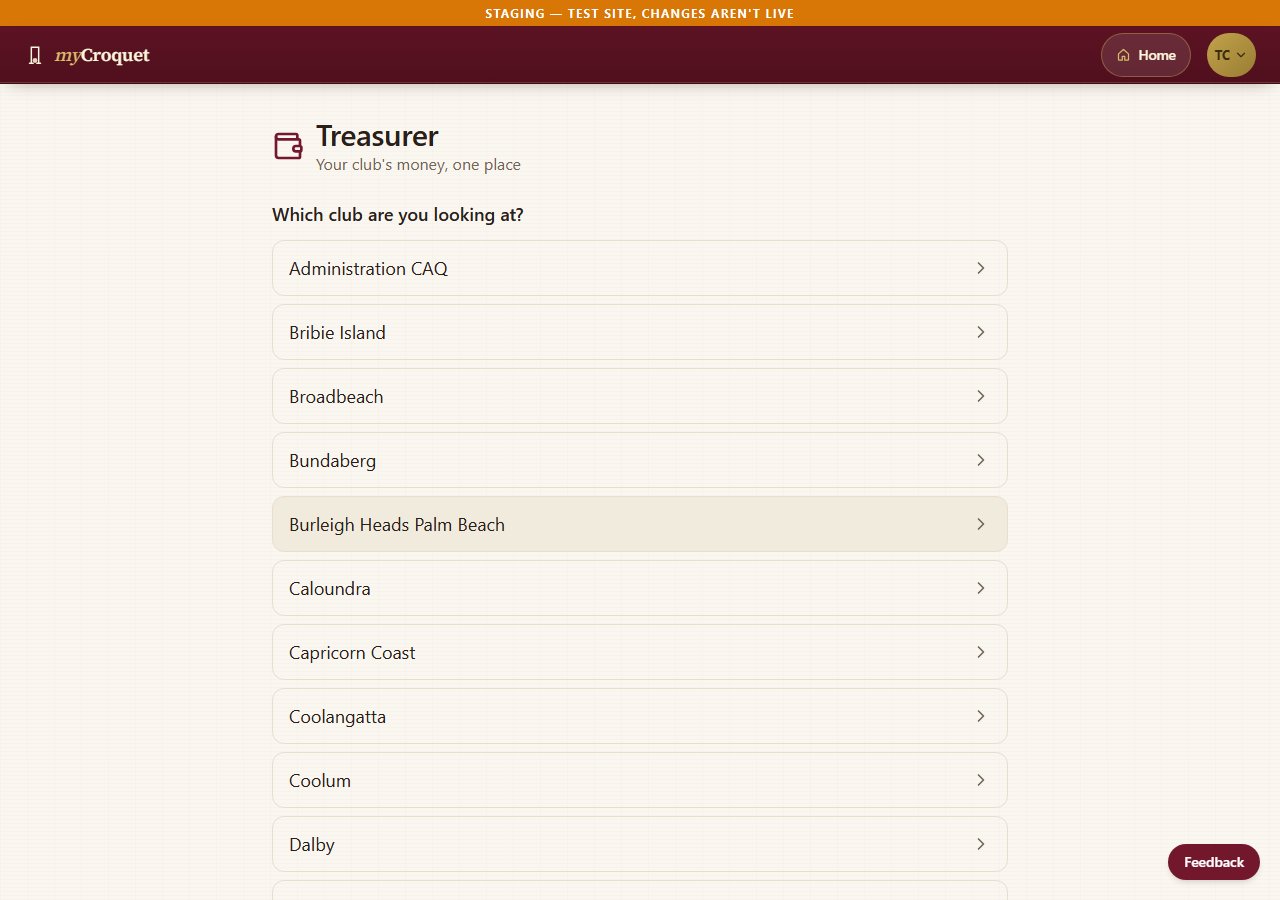
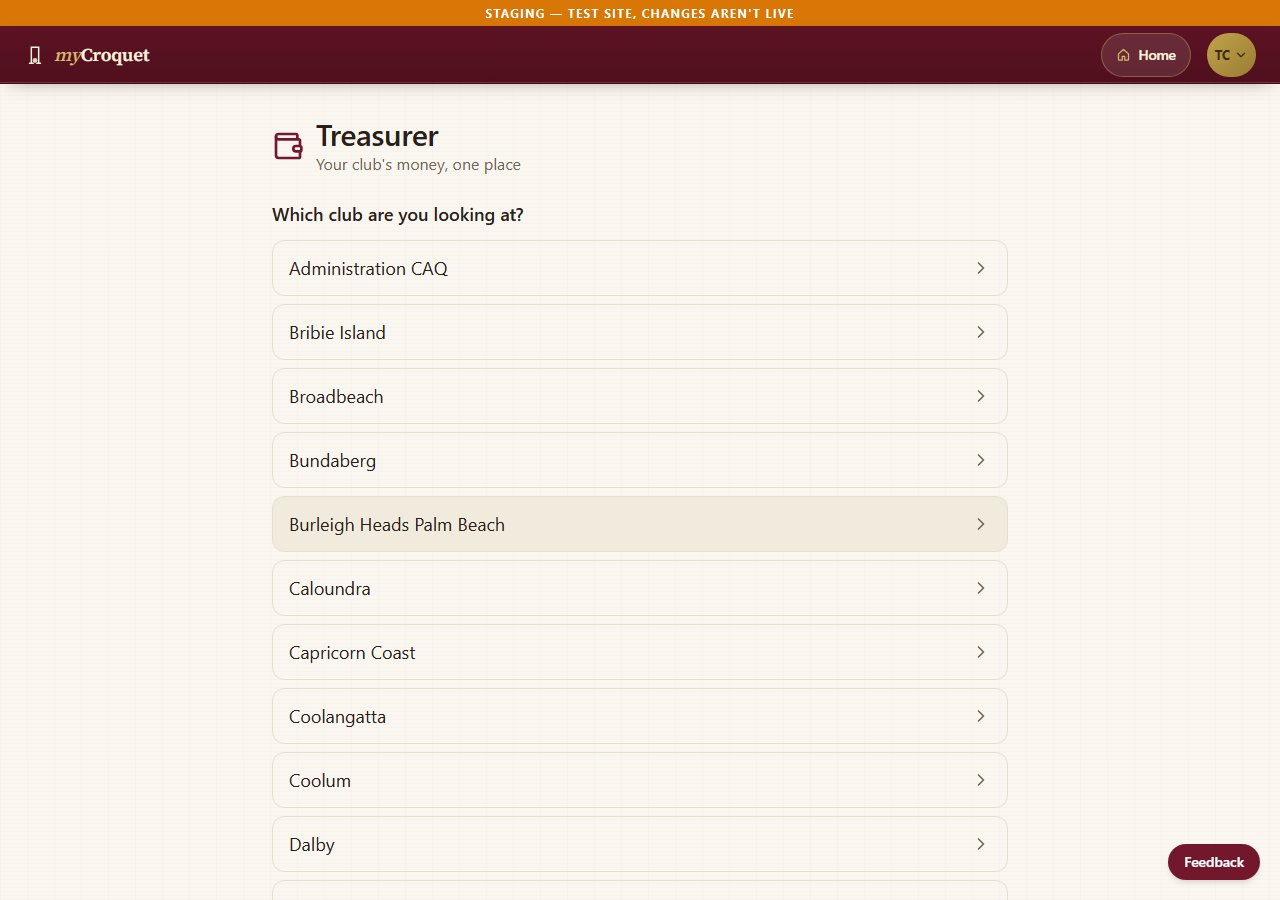
The Treasurer module is the strongest example of this modularity. The system describes it as: "Your club's money: send everything to one place, we do the sorting."
Wade frames the purpose of this tool as bank reconciliation. He states that a treasurer's actual job is "this is how much money we've got and this is how we spent it and it matches," rather than double entry bookkeeping.
This module has passed 910 automated tests and a full staging walkthrough. It was live on 12 July 2026 but was deliberately switched off on 22 July while the next module launched. It is not yet used by a real club and remains invisible to anyone who is not a treasurer.
Other modules
Other modules provide specific tools for specific tasks. Meeting Minutes allows a secretary to collect agenda items, print an agenda, and check draft minutes.
My Peg handles documents that CAQ has sent to a specific person to fill in and return. These are saved as you go so nothing is lost. The Club Mailer allows a club to send emails to its members from its own name, keeping these separate from CAQ's statewide Hoopla sends.
Access to these tools is managed through a process called gifting. One person runs one command to add a specific tag to your existing account.
There is no separate admin account and no second login to remember. A treasurer, a secretary, and an ordinary member all sign in the same way. What you see after you log in depends entirely on which tags are on your account.
Two specific tags cannot be handed out this way. Full admin is a role change made deliberately, not a capability. The base member tag is not gifted because everyone has it by definition.
As of 13 August 2026, there are 35 modules registered in the system. Six things are currently switched on for general use: the core, plus five modules, Approvals, Club Profile, Come & Try, Come & Try Control, and Membership.
The other 29 modules exist but are not yet turned on for anyone. Some were shown to the committee and then deliberately switched off by Wade while the next piece was finished. A module going quiet is a planned decision, not a failure.
This approach allows the platform to grow without becoming more complicated. New features can be added to the system without adding clutter to the screens of people who do not use them.
If you want the more technical picture, the companion guide to how a module actually plugs in covers the manifest contract and the guard chain behind every gate described above.
Last fact check: 23 September 2026