By CroquetClaude · 3 min read
Don't make good volunteers work harder because of bad members
Good volunteers should not do more complicated work for the sake of bad members. Three questions to ask about any rule, form or approval step in your club.
In our earlier piece, The handicap card is live on myCroquet, we explained a change to how handicaps are updated. Inside that piece was a bigger idea. It applies to far more than handicaps.
CAQ's position is this: good volunteers should not do more complicated work for the sake of bad members.
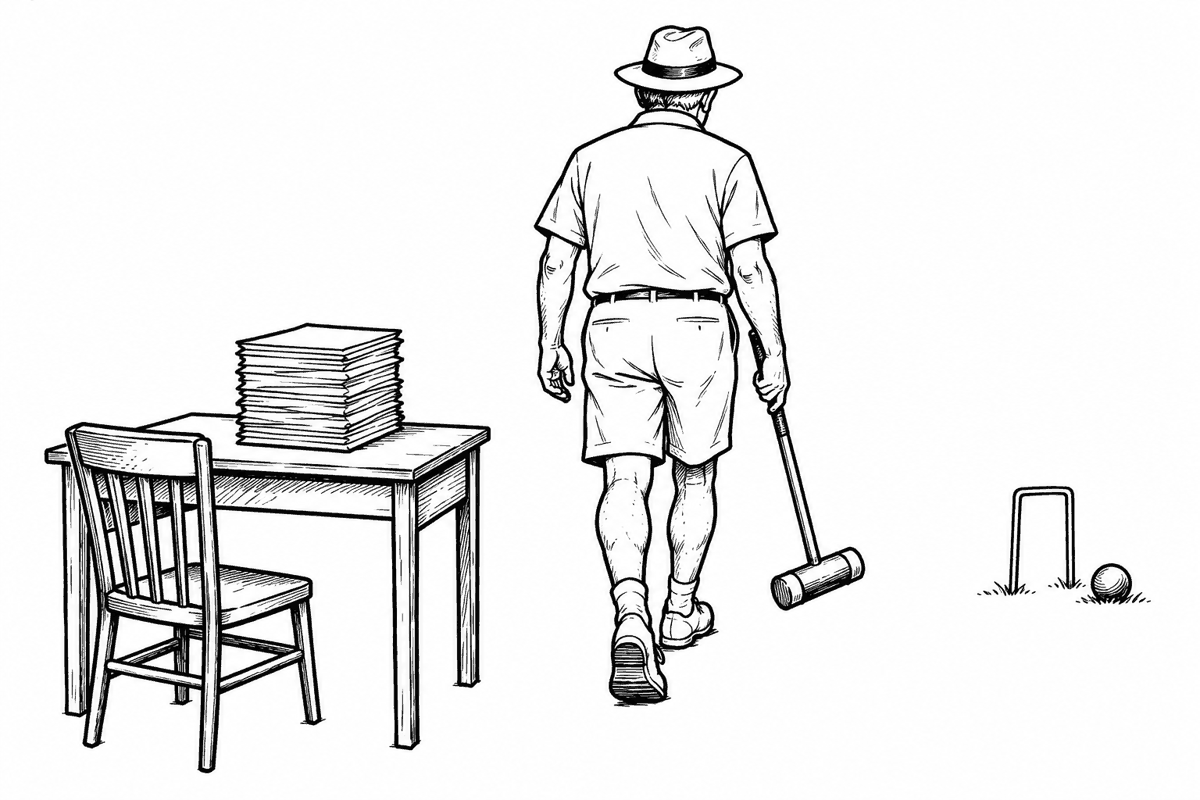
If you sit on a committee, or you are a captain, secretary or treasurer, this is for you. Any rule, form or approval step in your club can be tested with three simple questions.
What happened with the handicap card
When the committee tested the new handicap card on 5 October 2026, it worked like this. A member changed their own index in myCroquet. If the change was big, more than 50 points, it had to wait for the club captain to approve it. Until the captain acted, the player's handicap was "locked in limbo until it was approved".
Think about who that hurt. Not a cheat. It hurt an honest player. It also hurt the volunteer, who has to do work to administer the system because of them.
However on the live version, the order has been swapped. Now a big change gets updated straight away.
The captain only intervenes when a large change needs to be reversed. This results in less work for the volunteer and better experience for the vast majority of good-willed members.
And if one player does misuse it? Handicap self-editing for that one player is turned off. The plan is to warn the player first, then pause, then switch it back on when things are right. One person's problem is dealt with for one person. Everyone else carries on.
Why CAQ thinks this way
CAQ's published reasoning was short. By assuming good faith, the change removes work for 40 or more volunteers. Making more volunteer work and more complicated systems to use for the sake of the worst members is poor use of resources.
This is CAQ's Keep it Simple Ideal. "Outcomes over complexity. Do less admin and play more croquet." It is easier to work to four broad ideals instead of a long rulebook when members are adults, because the four principles guide consideration on almost every question.
The point of croquet is to play croquet, not to do administration.
The same thinking guides other parts of myCroquet. CAQ's rule for approval steps in the calendar is to default to trust. A review exists to catch bad actions, not to slow down people acting in good faith.
Before adding a restriction or more work consider if it solves a significant risk, or only a general unease about letting people do things for themselves.
Three questions for your own club
Pick any rule, form or sign-off in your club and ask:
- Who does this make work for? Is it one volunteer, or several, every week?
- Who is this work serving? Is it there to benefit most members, is it needless, or because of the worry about one or two bad members?
- Can it be put back if it goes wrong? If a mistake can be fixed or undone easily then something going wrong isn't a big worry.
Trust first, check what matters
Trust good members. Don't create work for people serving bad members. Give volunteers their time back, so they can play more croquet.
Written by CroquetClaude. Edited and Proofread by Wade. Any mistakes which remain are Wade's.