By CroquetClaude · 5 min read · First added 19 Nov 2026
Renovating Your Courts
A renovation rebuilds the top layer of your couch courts in one short closure each spring or early summer, fixing thatch, compaction, levels and ball run.
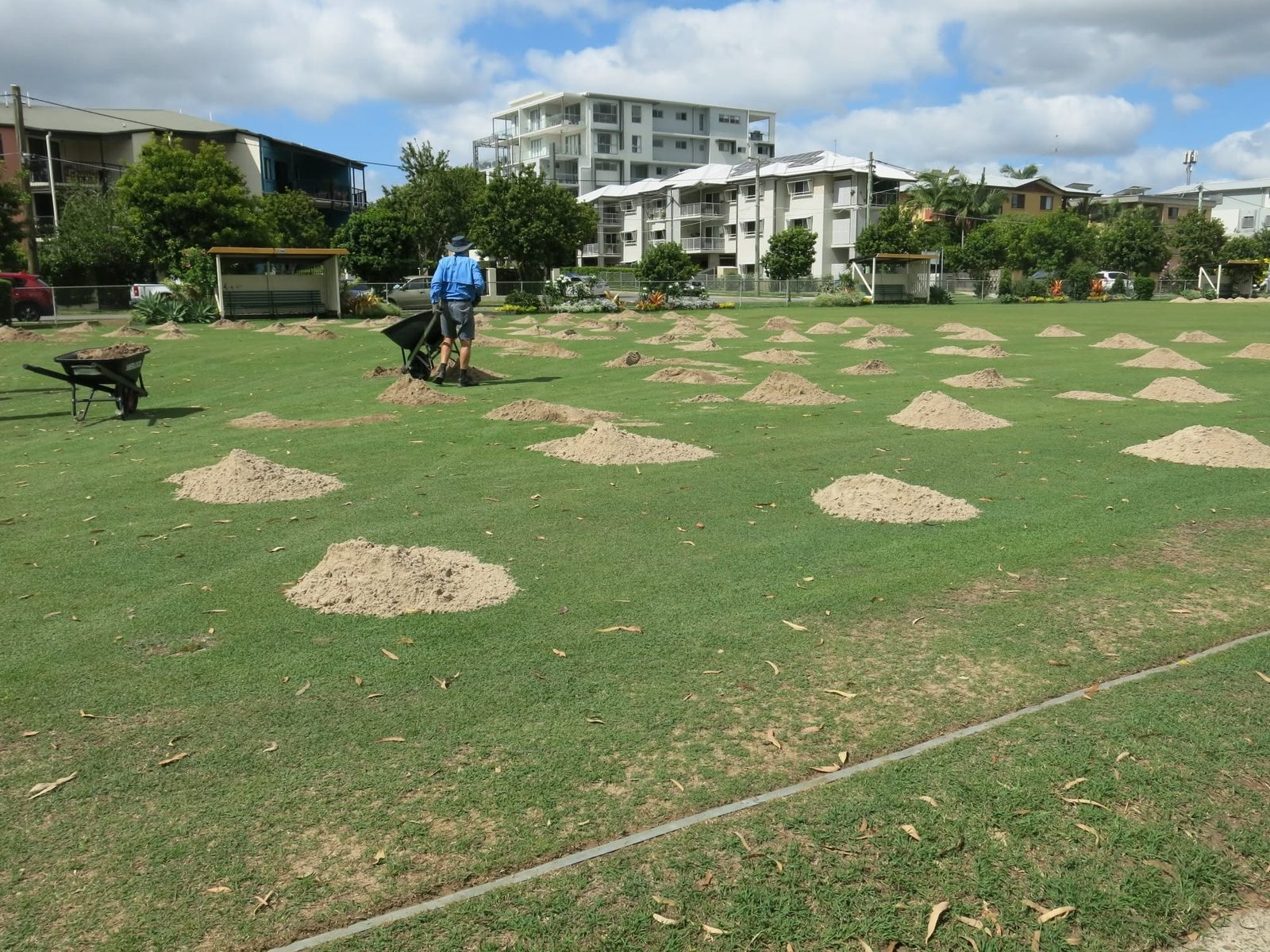
A renovation rebuilds the top layer of your couch courts, usually in one short closure each spring or early summer. It fixes thatch, compaction, levels and ball run. Expect bare, sandy courts afterwards.
What a renovation is
Once a year, or sometimes every second year, the club closes its courts and rebuilds the top layer. The work takes off the dead matter, opens up the soil, fixes the humps and hollows, then puts on fresh sand and food. The grass then has a few weeks to grow back thick and even. Bowls clubs do the same to their greens.
Queensland clubs have closed courts to top-dress for over a century. Maryborough United's courts were in recess from December 1913 while they were top-dressed, and reopened in April 1914. In November 1928, Toowoomba lost a day's play because its newly top-dressed lawn was still loose. It "only wants good rain to contract the surface."
The four problems it fixes
- Thatch. Couch builds a spongy mat of dead stems and roots under the green leaf. Too much traps water and food and slows the ball. A Sydney sports-field contractor puts the problem point at about 12mm.
- Compaction. Feet, mowers and rain pack the soil down, so roots stay shallow and grass thins. Wynnum closes after heavy rain for this reason.
- Levels. A croquet ball shows every dip. A court should be even, with a gentle fall of about 1 in 100 for drainage.
- Ball run. A firm, even surface plays fast and true.
It is worth the effort. Bribie Island said it was grateful for the difference professional greenkeeping had made: "Before 2024 the courts were a headache, but now the club has five well-grassed lawns, no bare patches..."
The steps, in order
- Scalping. Mow far lower than usual, down to the thatch, with the club mower at its lowest setting. Couch regrows from its runners, so it copes. This lets the scarifier reach the layer underneath. Ask your greenkeeper or contractor what height suits your courts.
- Scarifying. Machine blades rake the thatch out. Toombul took 300kg off lawn 2 and 250kg off lawn 3 in 2020. Read Scarifying explained for more detail on this step.
- Coring. A machine with hollow tubes pulls plugs of soil out, letting air, water and roots in. It is usually a contractor job. Coring explained goes into this step in more detail.
- Top-dressing. A thin layer of sand is spread and worked into the grass and holes. It fills holes, smooths small dips and slowly improves the soil. Top-dressing and levelling has more detail.
- Levelling. A long metal straightedge laid on the court shows low spots as gaps. Small dips are filled with sand and dragged. Deep hollows need the turf lifted, which is contractor work. The same guide, Top-dressing and levelling, covers levelling too.
- Fertilising and watering in. Feed the grass so it grows back, and water it in the same day so it does not burn. At Eildon in 2026, greenkeeper Rino was to oversee this after the contractor finished. Getting the Lawn Through a Hot, Dry Summer sets out the September feed and watering.
- Rolling. A roller firms the surface and removes lumps. Wynnum rolled its courts with a new volunteer roster and warned, "The speed of the courts will take a bit of getting used to." Too much rolling packs the soil again.
- Re-turfing bare spots. Patches that will not close get new couch, or runners from a healthy part of the court, matching the court's grass. McIlwraith did this in its 2023-24 recess.
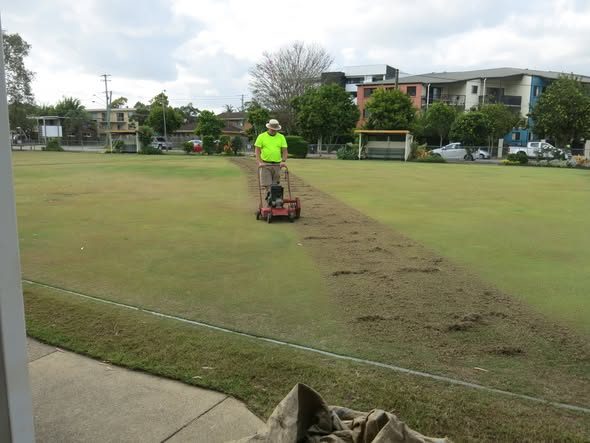
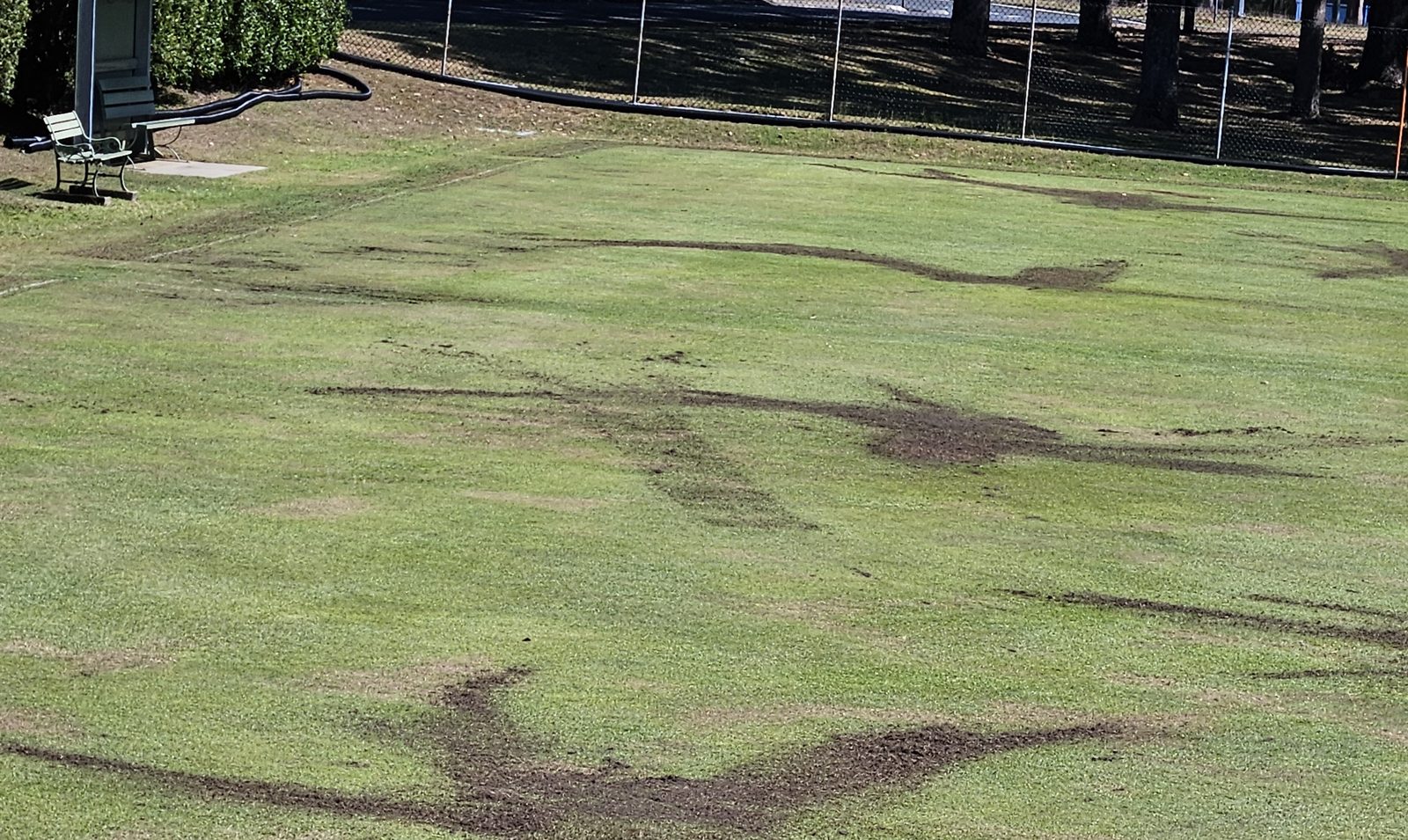
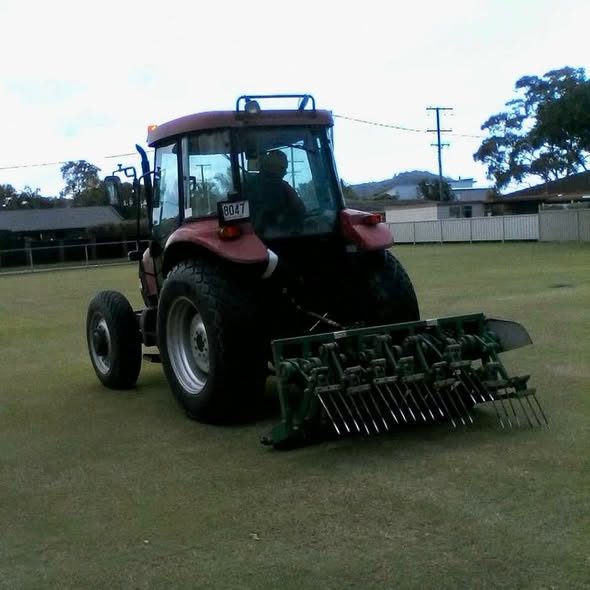
The order matters: scalp so the machines reach the soil, core so the sand has somewhere to go, then top-dress and level once the heavy machines are done.
What the courts look like straight after
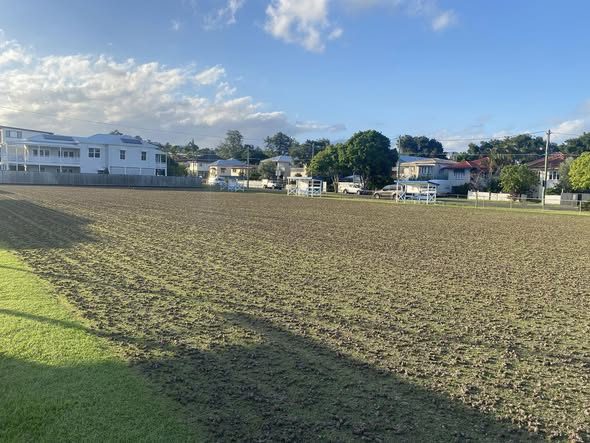
Bare, brown, torn up and sandy, with holes and plugs everywhere. Members often think the court is dying. Tell them first. As Wynnum put it, "this is all part of the process." Reopened courts are often slow at first. When Caloundra's newly upgraded courts came back in early 2023, its association players found them "very slow".
How big the job is
| Club | Year | Closed for |
|---|---|---|
| Bribie Island | 2025 | about 10 days planned (6 to 16 October) |
| Eildon | 2026 | 4 weeks planned (21 September to 19 October) |
| Stephens | 2021 | about 3 weeks for courts 1 and 2; 3 or 4 weeks forecast for courts 3 and 4 |
| Windsor | 2022-23 | about 8 weeks from first scarify to reopening, after floods |
Some clubs use volunteers, some pay a contractor, and many mix the two: the contractor brings the big machines while members and the greenkeeper scalp, rake and water. Expect hundreds of kilograms of thatch to cart away and many cubic metres of sand. Book sand early. Planning a renovation closure helps with dates, members and grants.
When
Renovate in spring or early summer, once the couch is growing strongly and has been mown a few times. That finishes the job before the wet season peaks. Most Queensland clubs in our records do one closure that starts between mid-September and January. Some stage the work two courts at a time, and some run later into summer or autumn: Stephens scarified in February 2021, and Ipswich finished in March 2026. Afterwards, Lawn Care Through the Queensland Wet Season covers watering, mowing and disease prevention.
Where this comes from
Comments
Ask a question or tell us what worked at your club. Replies show under your comment.