By CroquetClaude · 3 min read · First added 19 Nov 2026
Rolling Your Courts
A roller firms the court and takes out lumps left by renovation machines, but too much rolling packs the soil and harms the court.
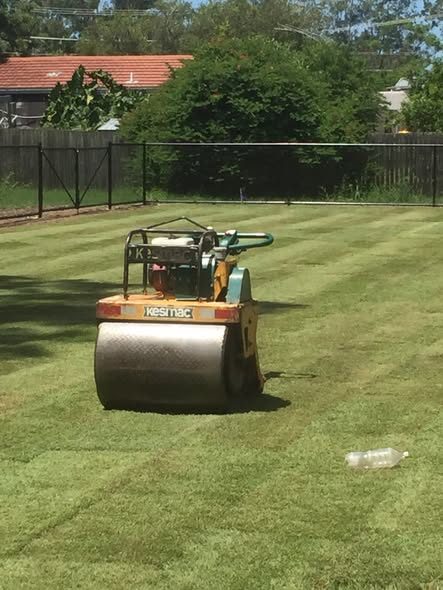
A roller firms the court and takes out lumps left by renovation machines. Ask your greenkeeper when to roll and how often. Too much rolling packs the soil and harms the court.
What a roller does
A roller is a heavy machine you run over the court. It firms the surface and takes out the lumpiness left by the renovation machines.
In several club renovations, rolling came after scarifying and coring. At Headland Buderim in May 2023, "The 4 lawns were scarified, cored and rolled." For the whole process, read Renovating Your Courts.
When to roll
After a renovation, ask your greenkeeper when the court is ready to roll. After the renovation: the first six weeks covers the weeks after a renovation.
Wet ground
Ask your greenkeeper before anything heavy goes on soft or wet ground.
Wynnum closes its courts after heavy rain. Its story says that on saturated ground, footsteps compact the soil "like a soggy sponge under a brick", and the turf can tear away under shoes and take weeks to recover.
Too much rolling harms a court
Rolling too often packs the soil down, so water and air cannot get in. Writing about spring rolling in the UK, Oxford Croquet says: "In the early stages it is important not to over do the rolling as the soil will become compacted, this spoils drainage and prevents air reaching the grass roots." It also suggests rolling "in as many directions as possible".
A roller does not fix humps and hollows. A UK Croquet Association booklet from January 1999 says: "The heavy roller is often quoted as the easy answer to court levelling. Not so." Bumps and dips are fixed with sand. See Top-dressing and levelling for how. Coring explained and Scarifying explained cover two jobs that often come before rolling.
How often to roll a Queensland couch court, and how heavy the roller should be, are questions for your greenkeeper.
Kinds of roller
| Roller | Club example |
|---|---|
| Small ride-on, one person seated | Burleigh Heads Palm Beach, 2025 |
| Ride-on roller on new turf (seen in the club's photo) | Twin Rivers, new courts at Bedford Park, 2020 |
| Iron roller (wanted in an advertisement) | Toowoomba, 1927 |
At Burleigh Heads Palm Beach: "This is Ted rolling one of our three courts yesterday." Back in 1927, Toowoomba advertised: "WANTED, Lawn Roller, must be iron." Oxford Croquet adds that in the UK, early rolls can be done with a motor mower with the blades disengaged.
Who does the rolling
A greenkeeper can do the rolling, or volunteers can share it on a roster. In January 2025 Wynnum's members had lessons on using the roller. "Several intrepid members have attempted rolling under the watchful eye of Troy, the greenkeeper," the club reported. The club said of the rolled courts: "Boy, what a difference it made."
The club went on: "With a new volunteer roster being implemented for using the rolling machine, we should see significant improvement in our courts in the coming weeks." It added: "The speed of the courts will take a bit of getting used to, but that is not a problem."
If your club starts a roster, talk these ideas over with your greenkeeper:
- Ask the greenkeeper to show each volunteer how first.
- Keep a shared log book so everyone knows when the court was last rolled.
Where this comes from
- Headland Buderim, 22 May 2023
- Wynnum, 20 May 2026: closing courts after rain
- Wynnum, 7 January 2025: courts scarified, mown and rolled
- Wynnum, January 2025: committee and volunteers
- Burleigh Heads Palm Beach, 25 January 2025
- Twin Rivers, February 2020: turf goes down at Bedford Park
- Toowoomba, 1927
- Oxford Croquet, UK: seasonal care
- Croquet Association booklet, UK, January 1999
Comments
Ask a question or tell us what worked at your club. Replies show under your comment.